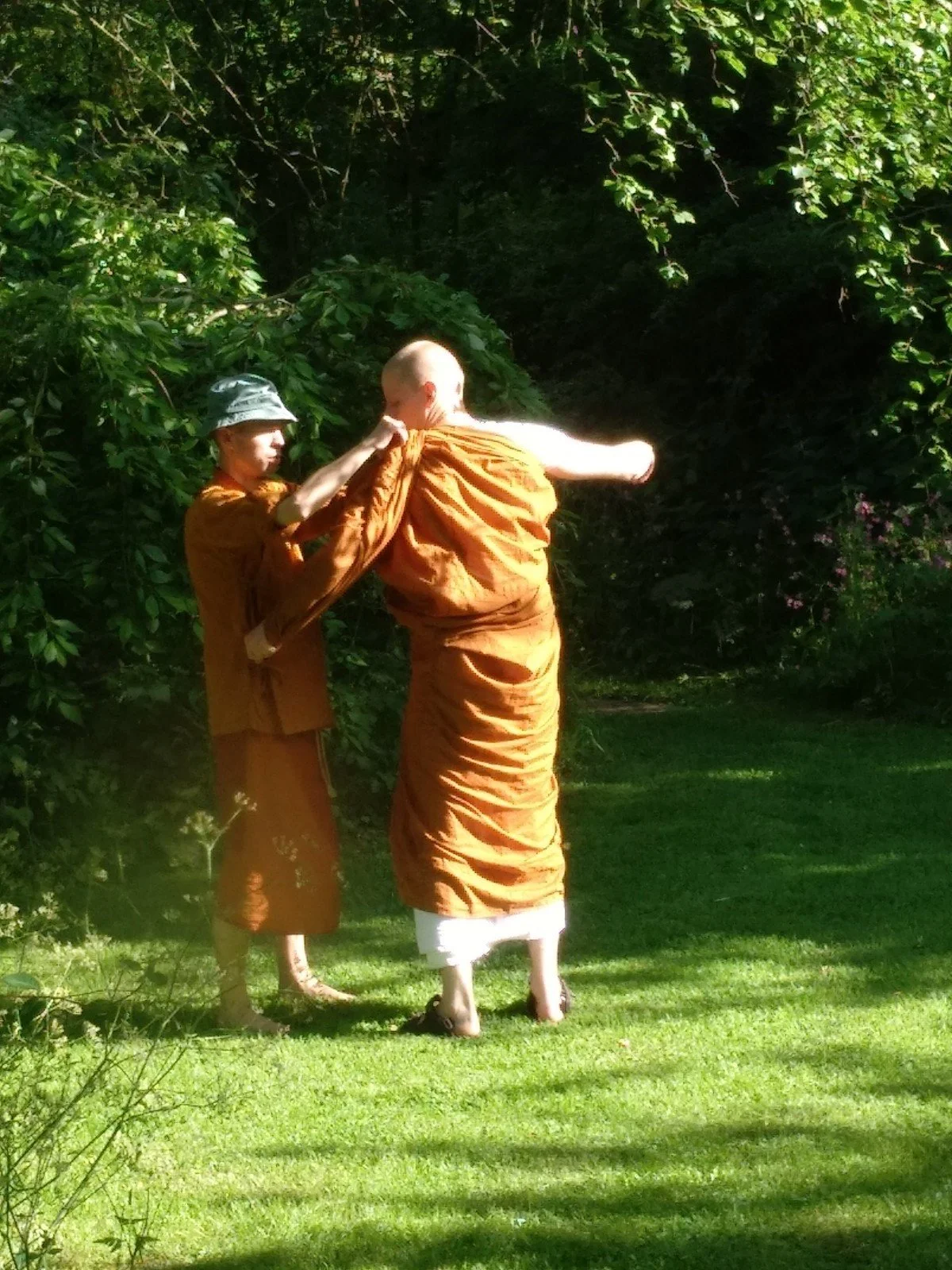
Me at 30, learning to wear a robe. 2 years and 7 months in the monastery. What’s it got to do with coaching executives?
Thinking can stop altogether when the mind settles. The jhānas are progressive levels of meditative absorption, given different names across contemplative traditions. That’s a real perk of monasticism, but it’s temporary.
For me, insight didn’t come from beautiful meditations. It came afterwards, from enduring hardship. Arriving at the monastery, I thought meditation was a solution. Leaving, I saw it as another tool for introspection, and now for relational work. The real prize is self-knowledge, insight, and their practical application. Hard-won, ordinary learning. Nothing special.
For 2 years and 7 months I lived on alms food. The generosity of working people who fed and clothed moneyless monks and nuns who follow a particular form. I’m not religious and never was - meditation and contemplation are practices to be explored, not dogmas to be adhered to.
Other monks cracked up when I likened long retreats to moving furniture away from the walls and seeing what’s really behind there. That’s the tricky part. Here the rawer human drives are clearer. The roots of desires are exposed. Sex, status, food, pride, identity. Monasticism voluntarily deprives us of stimulation, both physiologically and cognitively. Before settling, the mind can put up a fight. Returning to business after retreat isn’t necessarily pleasant either, but that’s the nature of things. How will you respond? What will you do with the new insights?
I’ve found aspects of systemic training to be deeply aligned with monasticism, as Kunsang Yang Yang 释彻寂 might attest. Contemplation invites a meta-position that facilitates attitudinal changes and self-knowledge. Self-reflexivity puts these insights to use in relational encounters.
When meeting a coaching client, I get in touch with a stillness, suchness, togetherness. There may well be a busyness within the stillness, but that’s information, something to notice.
Special, refined meditative mind states are all well and good, but insight, self-knowledge and a broad, sustainable mindfulness do more for wellbeing, leadership and quality decision making.